
Quality Assurance
An unwavering pursuit of quality.
Pioneering the industry with
rigorous quality control.
Since our founding, Harada Tea has prioritized not just taste, but also safety. We were among the first in the industry to establish a dedicated quality control lab and began pesticide residue testing early on (now conducted externally). Today, we continue to strengthen our quality control systems through measures such as radioactive material testing, strict hygiene in factory operations, and advanced inspection equipment.
Traceability
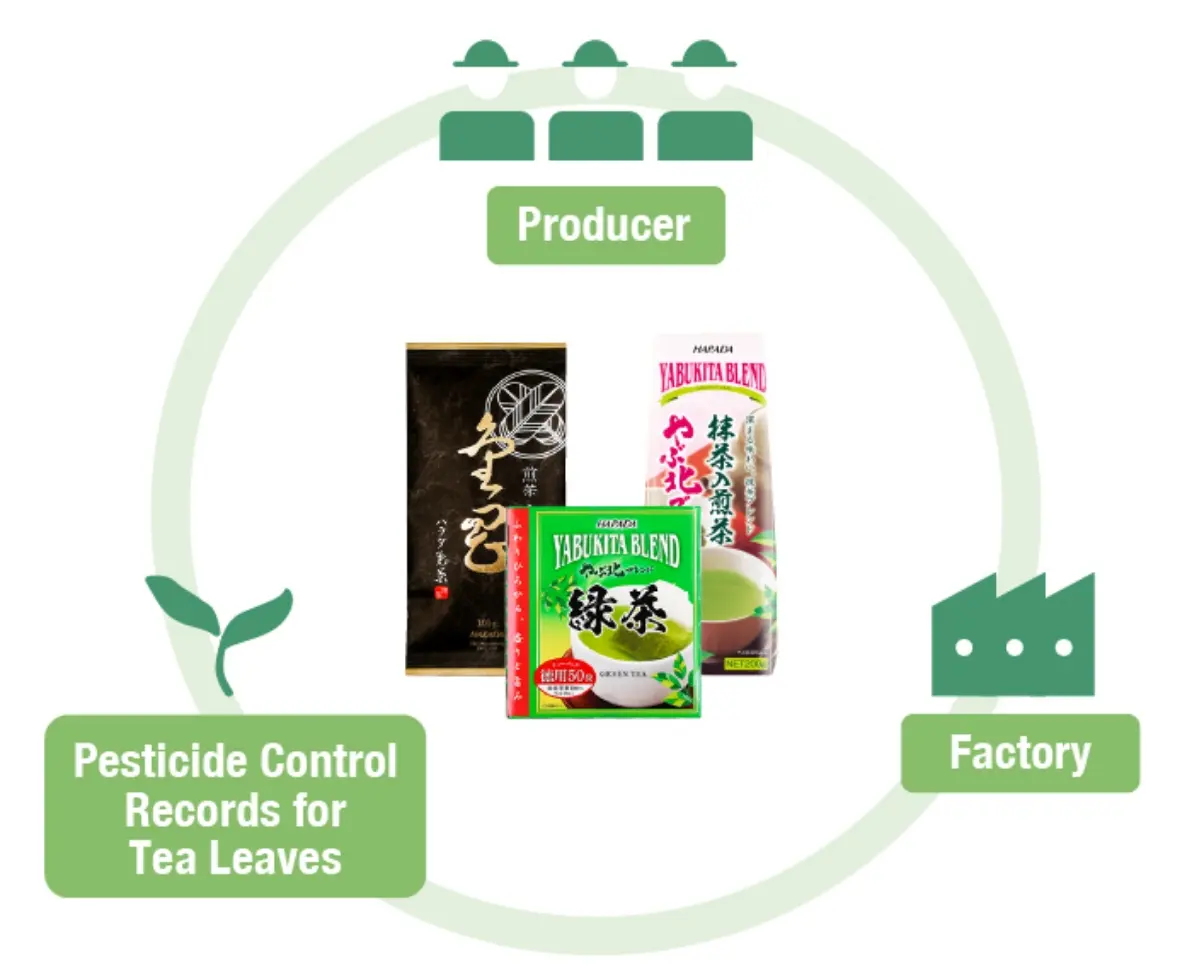
Complete Visibility from Farm to Product
All of our tea products are fully traceable — every package allows us to track the farmers and production history of the tea leaves it contains. This system is known as traceability, and it is one of the key principles Harada Tea is deeply committed to.We verify details such as which tea farmer harvested the leaves, when they were picked, and what kinds of pesticides were used and in what amounts. Only high-quality tea leaves that meet our strict standards are selected. At every subsequent stage of production, we also record information such as which factory processed the leaves and when the finishing took place. In other words, each product carries its own detailed blueprint.
Traceability Implementation Guidelines
Producer
Production date / Production area / Variety
Factory
Plucking date / Finishing and processing date / Packaging date
Tea Leaf Pest Control Record
Type of pesticide used / Concentration / Date of application / Number of days before plucking
Quality Control System
Thorough Quality Control
-
Raw Material
Inspection- Sensory
- Weight
- Component
(Infralyzer) - Additives
- Pesticides
- Foreign Matter etc.
-
In-process
Inspection- Sensory
- Component
(Infralyzer) - Microbes
- Seal
- Oxygen
- Weight etc.
-
Product
Inspection- Component
- Sensory
- Foreign Matter
- Weight
- Seal
- Oxygen
- Microbes etc.
-
Sensory Test
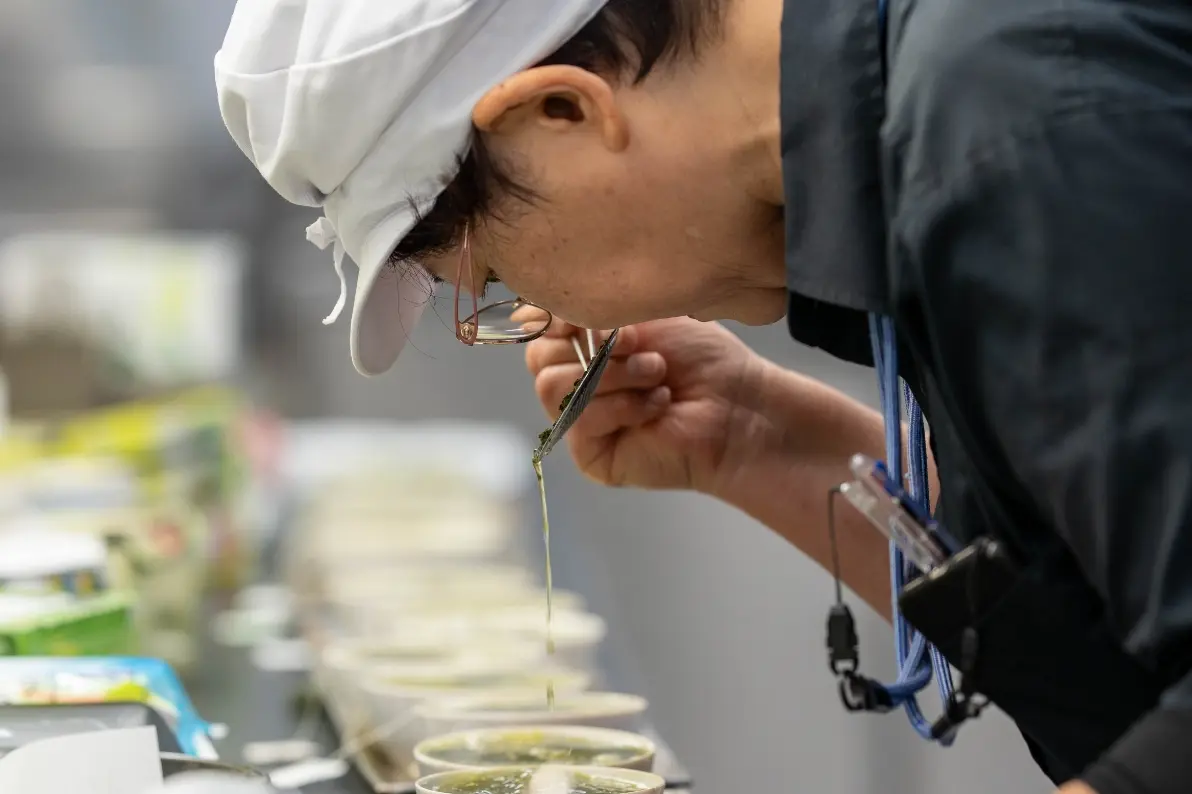
Sensory Evaluation
Passing Rigorous Inspections
Our Quality Control Department operates independently from the production division, maintaining strict oversight from a quality perspective. We conduct thorough quality inspections at every stage — from the procurement of tea leaves to the final production process. Each finished product undergoes microbiological testing, as well as sensory evaluations performed by certified in-house inspectors who use all five senses to ensure excellence.
Improving Quality Control Methods
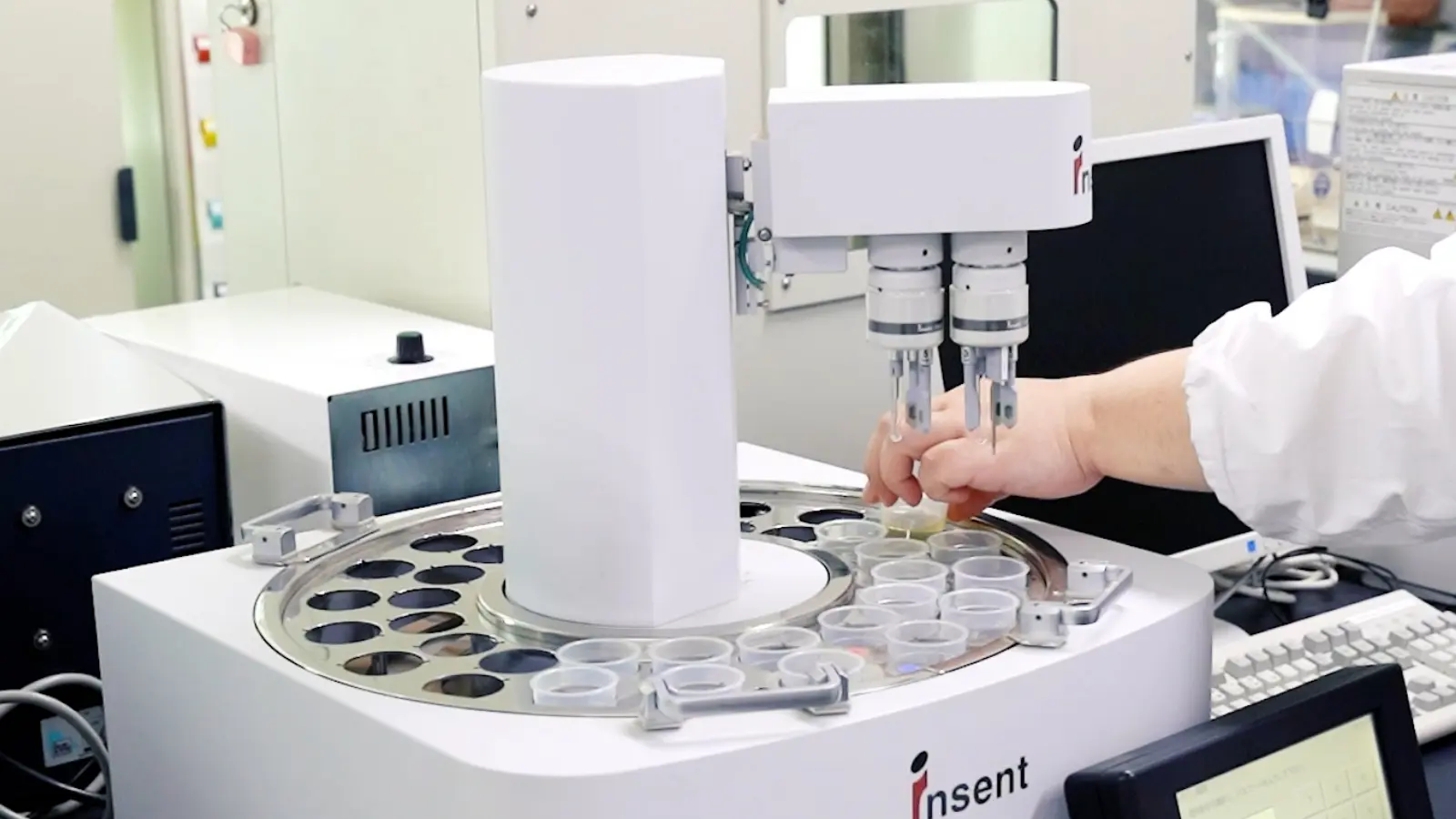
Building a quality control system is not enough—instilling a high awareness of quality among all staff is essential. From early on, we’ve focused on employee training and accountability. Since 2000, all of our factories have been ISO 9001 certified. We also apply GAP know-how in collaboration with farmers, working together to raise the bar for safety and reliability in Japanese tea production.